Witch in Training
A Designer’s First Look: Charm with Clear Intent
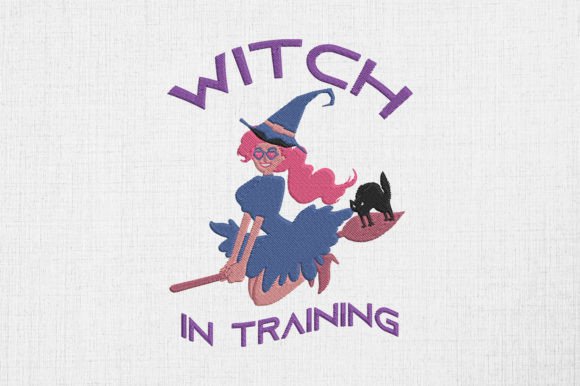
When Witch in Training popped up in my design queue, I paused—not because it’s flashy, but because it’s quietly confident. It doesn’t scream “Halloween.” It whispers “curious girl, broomstick in hand, potion bubbling just off-frame.” The layout is balanced but playful: centered figure with slight tilt to the head, soft curve in the wand arm, and just enough negative space around the silhouette to let fabric breathe. This isn’t a dense applique design or a high-detail portrait—it’s a machine embroidery design built for readability at 3–4 inches, with intentional simplicity in the facial features and robe folds. That makes it unusually versatile for real-world use.
Real Project Test: A Custom Embroidered Tote for a Local Boutique
Last week, I stitched Witch in Training onto a natural canvas tote for a small-town gift shop launching their Halloween collection. We used medium-weight tear-away stabilizer, 40-weight rayon thread, and a 5x7 hoop. The result? Clean satin stitch edges on the hat brim and wand, smooth fill stitch in the dress, and crisp running stitch for subtle hair texture—no skipped stitches, no puckering. Customers loved how it read instantly from across the room, yet held up beautifully when held close. That’s the sweet spot: legible at arm’s length, thoughtful up close. It didn’t overwhelm the tote’s texture, nor did it disappear into it—a rare win for holiday embroidery on unbleached cotton.
Where It Shines (and Where It Asks for Care)
- Custom apparel: Works beautifully on crewneck sweatshirts and relaxed-fit tees—especially over left-chest or center-back placements. The moderate stitch density avoids stiffness, so the garment stays wearable.
- Personalized gifts: Paired with a monogram or birth month charm, Witch in Training elevates baby onesies and toddler pillow covers without feeling overly themed. Parents appreciate the gentle whimsy—not caricature.
- Etsy & small shop products: As a digital embroidery file, it converts well into printable mockups. Its clean lines scale cleanly for thumbnails, and the recognizable-but-not-cliché vibe supports brand consistency across seasonal listings.
- Home decor: On tea towels and pillow covers, it reads as handmade product—not mass-produced clip art. The slight asymmetry in the pose gives it warmth, not rigidity.
But here’s where attention matters: avoid Witch in Training on ultra-thin fabrics like chiffon or heavily textured burlap without testing. The fill stitch areas (robe, hat) need stable ground—on stretchy knits, double-layer stabilizer is non-negotiable. And while it handles dark fabric well, test your thread colors first: light lavender or sage green can mute on charcoal; crisp white or mustard pops better. Also, skip curved surfaces like baseball caps unless you’re using a cap frame—those delicate wand details won’t hold true on a tight radius.
What It Adds to Your Finished Product—Beyond Stitches
This isn’t just about execution—it’s about perception. When customers see Witch in Training on a handmade item, they register care. Not “cute,” not “trendy,” but *considered*. That shifts how they value your work: a $32 embroidered tote feels like a keepsake, not a seasonal throwaway. For Etsy sellers, that translates to fewer “Is this machine-made?” questions and more “Can you add her name?” requests. For craft fair vendors, it sparks conversation—“Oh, my niece is *totally* a witch in training!”—which builds connection faster than any banner.
It also reinforces professionalism. Unlike some Halloween embroidery files that lean cartoonish or overly intricate, Witch in Training lands with quiet confidence. That consistency helps boutique branding feel cohesive across apparel, patches, and nursery decor—even if you’re stitching it alongside your own original designs.
Practical Notes Every Embroidery Designer Should Run Through
- Always test on scrap fabric first—especially if pairing with a new stabilizer or thread brand. Stitch density looks fine on screen; in reality, it may shift on brushed cotton or fleece.
- Check small details under magnification: the wand tip, the curve of the smile, the edge of the hat. If those blur or feather, adjust tension or needle size before committing to client work.
- Review licensing before selling finished items—some Halloween embroidery files restrict commercial use unless upgraded. Confirm what’s included with your purchase.
- Use black-and-white mockups to assess contrast. What reads as charming in color might vanish on heather grey or olive.
- Compare light vs. dark background renders—not just for mockups, but to anticipate how customers will photograph your product. Natural lighting favors this design’s soft edges.
- Confirm hoop size compatibility before digitizing adjustments. If your machine maxes out at 4x4, verify whether the design fits—or if it needs simplification.
Final Thought: A Design That Serves the Maker, Not Just the Season
Witch in Training stands out because it respects your time and your customer’s eye. It doesn’t demand perfect conditions to succeed—just thoughtful prep. It fits naturally into baby embroidery, holiday embroidery, and even year-round handmade product lines when styled right (think muted thread palettes, linen blends, minimalist placement). For craft business owners juggling Etsy listings, craft fairs, and custom orders, that flexibility is gold. It’s not the flashiest Halloween embroidery file out there—but it’s the one I keep coming back to when I need something that stitches cleanly, sells warmly, and feels authentically *made*.