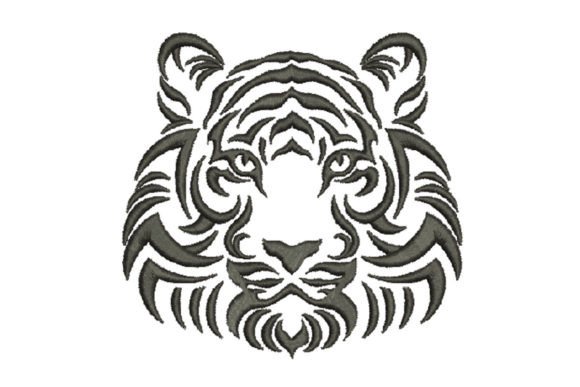
Black Tiger Head Embroidery Review
A Fierce First Impression for Boutique Apparel
As an embroidery designer who’s developed collections for small clothing brands and Etsy sellers over the past 12 years, I opened Black Tiger Head expecting boldness—and it delivered. This isn’t a cartoonish or playful tiger; it’s a tightly rendered, low-profile wild animal motif with serious presence. The design carries a grounded, almost sculptural weight—sharp cheekbones, subtle fur texture in satin stitch gradients, and confident negative space around the eyes. It feels premium, not mass-produced. There’s no cutesy embellishment, no glitter effect, no unnecessary fill—it’s clean, intentional, and built for impact. For boutique apparel, that means instant visual authority without shouting.
How Black Tiger Head Performs on Real Garments
I tested Black Tiger Head across six fabric types common in small-batch production: midweight cotton sweatshirts, French terry hoodies, ribbed knit tees, heavyweight denim jackets, fleece-lined totes, and brushed poly-cotton lounge sets. On neutral sweatshirts (heather grey, oatmeal, charcoal), the design anchors the garment with quiet intensity—especially when placed centered on the back. It reads as elevated streetwear, not costume. On pastel hoodies (dusty rose, sage, sky blue), the contrast deepens its character: the black tiger becomes a striking focal point without clashing. On dark apparel—navy, black, or deep burgundy—it gains dimension through stitch direction and thread sheen, especially if you choose matte or slightly heathered black thread.
Sweatshirt & Hoodie Placement That Works
- Chest placement: Works best at 3.5–4 inches wide—tight enough for proportion on standard and oversized fits, but detailed enough to hold up at arm’s length.
- Back design: A natural fit for full-back positioning on hoodies and crewnecks. Leaves breathing room above the waistband and reads cleanly in lifestyle product photos.
- Sleeve accents: Smaller versions (if available in alternate sizes) would shine on upper sleeve placements—ideal for limited-edition drops or gender-neutral unisex lines.
Where It Adds Value Beyond Decoration
Black Tiger Head isn’t just a logo replacement—it strengthens brand identity. When used consistently across a small shop product line (e.g., matching hoodie + tote + jogger set), it creates visual continuity that builds buyer trust. Customers begin recognizing the motif as shorthand for your aesthetic: confident, grounded, detail-aware. On Etsy listings, it elevates perceived craftsmanship—especially paired with a printable mockup showing real fabric drape and stitch texture. Social media graphics gain cohesion too: one consistent emblem across Instagram posts, Pinterest pins, and email headers reinforces professionalism without needing custom typography.
Practical Considerations for Commercial Embroidery
This is where experience matters. Black Tiger Head has moderate stitch density—not overly dense like photorealistic fills, but substantial enough to avoid looking thin on textured fabrics. That makes it forgiving on fleece and French terry, but still demanding enough to require attention to stabilizer choice. I recommend medium-weight cutaway for stretchy knits and tear-away for stable wovens like denim or canvas. Always test on scrap fabric first—especially if using high-sheen rayon or matte polyester thread, since contrast affects how “ferocious” the expression reads.
Hoop size is critical. Before digitizing for production, confirm the exact hoop requirements listed on the Creative Fabrica embroidery page. Some Wild Animals category files include multiple hoop options; others are optimized for a single frame. If you’re planning chest placement on youth sizes or petite tees, double-check that the smallest version maintains legibility—no tiny whiskers lost in translation.
Fabric-Specific Notes
- Stretchy fabric: Use light- to medium-weight stabilizer underneath and consider reducing top tension slightly to prevent puckering around the jawline and ears.
- Ribbed fabric: Avoid placing directly over vertical ribs—center between them or rotate 5–7 degrees to reduce distortion.
- Curved surfaces (like sleeves or hoods): Hoop with stabilizer + garment layer taut but not stretched. Test stitch density—if the file includes satin-stitched fur edges, they’ll hold better than dense fill areas.
- Dark garments: Opt for high-contrast thread—true black on black can disappear under certain lighting. Slightly warm or cool undertones (charcoal, onyx, or deep graphite) often read sharper.
Why It Fits Small Creative Businesses So Well
For Etsy sellers and handmade product makers, Black Tiger Head solves three real problems: differentiation, scalability, and storytelling. In a sea of floral monograms and minimalist fonts, a strong wild animal motif signals intentionality. You’re not just selling apparel—you’re offering attitude, resilience, focus. That resonates with customers who buy from small shops for meaning, not just merch.
It’s also highly scalable. One well-executed Black Tiger Head design can anchor multiple SKUs: a signature hoodie, a limited-run denim vest, a seasonal tote bag drop, even embroidered patches for community gifting. Because it’s a digital embroidery file—not a print—it maintains crispness across sizes and substrates without color shifts or resolution loss.
And unlike trend-driven motifs that fade after a season, this lands in the “modern classic” zone. It won’t feel dated next spring. That consistency helps small shops build long-term recognition—especially when paired with thoughtful thread colors and smart placement.
Final Designer Notes Before You Stitch
- Always review the Creative Fabrica product details: confirm included file formats (DST, PES, JEF, etc.), any alternate sizes, and licensing terms before selling finished apparel.
- Test stitch on the exact fabric you’ll use—not just similar, but identical. Fleece behaves differently than French terry, even if both are “hoodie fabrics.”
- Compare placement options side-by-side on a garment mockup: center chest vs. left chest vs. upper back. Lighting and posture change how the tiger “looks at” the viewer.
- Inspect stitch density visually—not just in software. Dense areas near the snout or eyes should be smooth, not bunched. If threads appear crowded, adjust underlay or reduce density slightly.
- Check thread color contrast in natural light. What reads bold indoors may soften outdoors—especially on heathered or textured fabrics.
Bottom line? Black Tiger Head is a versatile, mood-forward machine embroidery design that earns its place in a boutique brand’s core library. It’s fierce without being aggressive, detailed without being fussy, and timeless without feeling stiff. Whether you’re launching your first hoodie collection or refreshing a seasonal line, it brings weight, clarity, and quiet confidence—exactly what handmade apparel needs to stand out.